

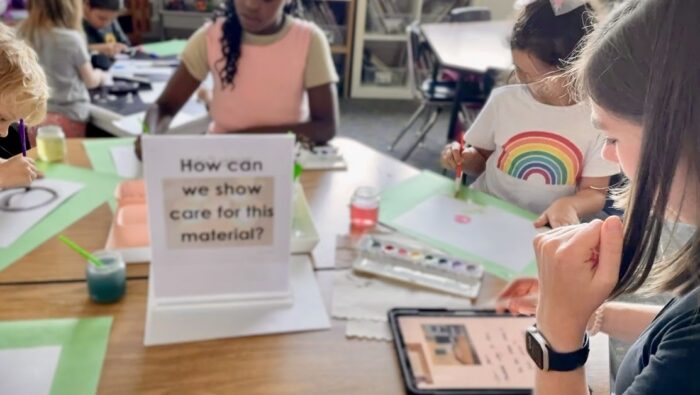


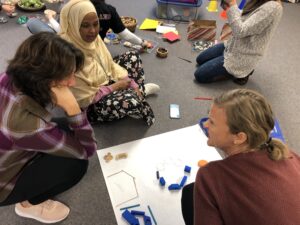
The idea that materials such as blocks, paint, sand, or clay can help children think more deeply, communicate their ideas, deepen their understanding, and wrestle with complex ideas may feel like a foreign concept. The idea of inviting children to play with these materials can be daunting. Worries that it might be messy, unproductive, and conflict-producing are all valid and reasonable thoughts. However, by implementing clear routines around the use and purpose of these materials, inviting children to use materials in conjunction with open-ended questions, and asking them to reflect on their work, you may find that the materials are an invaluable tool for learning and engagement in the classroom.
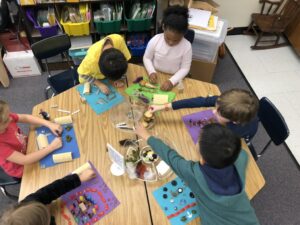
As Ann Lewin-Benham writes, Materials stimulate the senses, which respond by developing networks in the brain that in time enable us… to build relationships among complex ideas. Materials educate the hand, which drives language, movement, attention, planning, and scores of other brain functions. The combination of hand and materials is essential to virtually every endeavor.
Furthermore, materials can help us access a state of relaxed alertness, the prime place for learning – relaxed enough to think, take risks, wonder, and discover, while also alert enough to engage with a complex task or question.
So, how to get started?
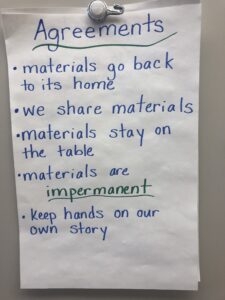
First, it helps to set up agreements around materials. Work with the children to decide how they will take care of the materials – before, during, and after using them.
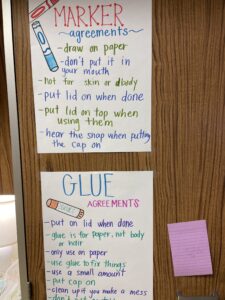
Second, give children time to get to know the materials. They need to be familiar with them and all their attributes, sometimes referred to as affordances in order to use them to their fullest potential. Introducing a material by asking What can this material do? Is a helpful protocol for learning about a new material.
Once children know how to take care of the materials and what the materials can do, they can use the materials as thinking tools. Inviting children to share their thinking as they use, manipulate, and play with materials helps them verbalize ideas that are forming in their minds, shows them that you are interested in what they think, and holds them accountable for the challenge they are exploring while using the material.

It’s normal to have doubts or to feel overwhelmed. Talk to a colleague who has experience using materials in the classroom. Consider this blogpost from Opal School: Going to Materials. Have patience with yourself and the students – listen to children and allow yourself to be surprised by what happens when children use materials as thinking tools.
I have some questions for you, Reader:
- What do you do when you are not sure what students are experiencing with materials? How can you find out more?
- How can we reframe our questions to find out more?
- How can we introduce children and adults new to the world of materials to the power of materials as tools for thinking, connecting, and reflecting?
- What happens for you when you use materials?
Written by former Opal School teacher researcher Hannah Chandler who now teaches preschool at the International School of Kuala Lumpur and supports curriculum work for TPP from afar.